

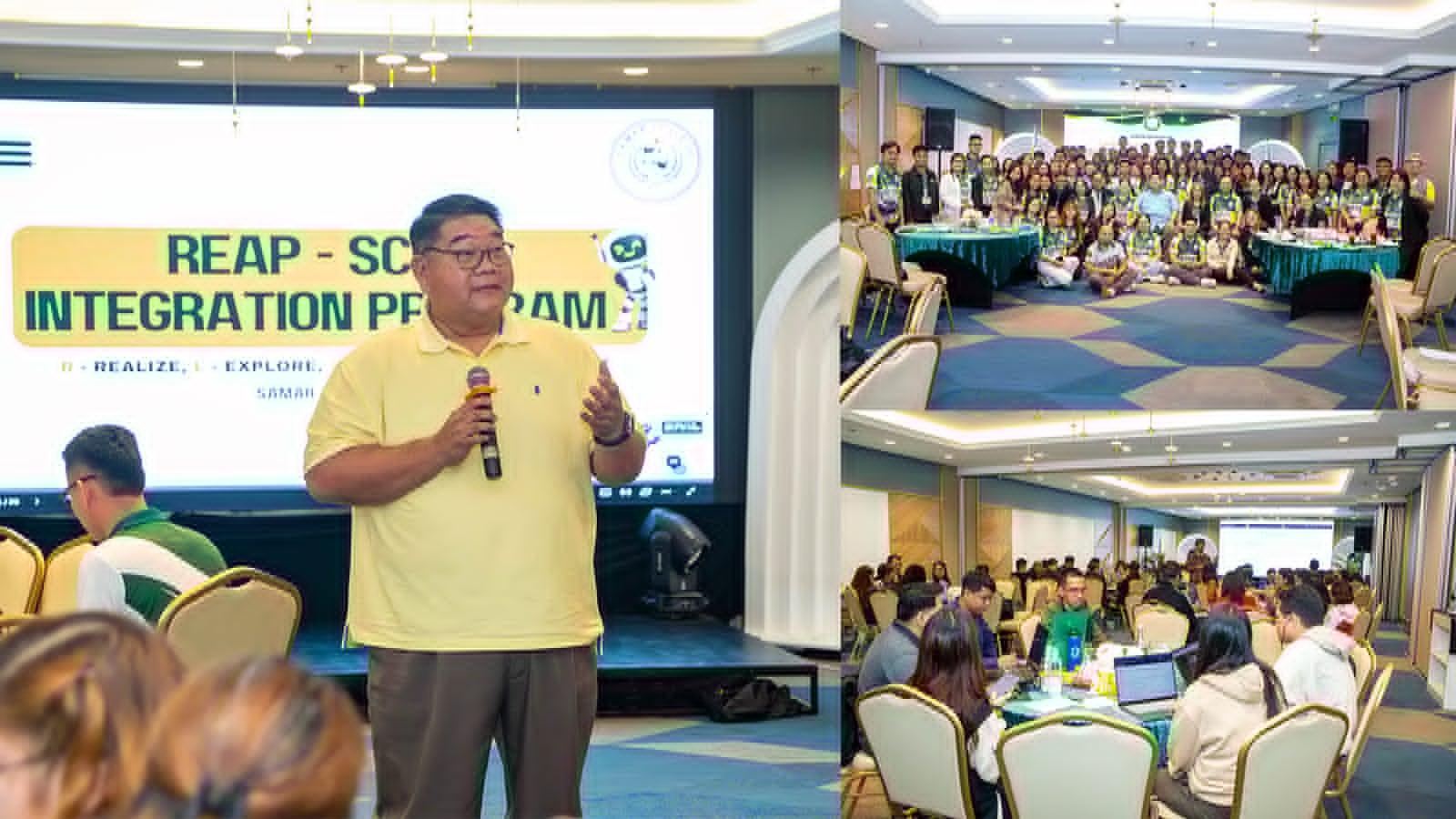
TACLOBAN CITY, Philippines – Samar Colleges, Inc. (SCI) successfully concluded its four-day Faculty Professional Development Seminar-Workshop held from July 15-18, 2026, at the Radiant Hotel and Events Place in Tacloban City. Anchored on the theme "Innovating Minds, Elevating Teaching: Empowering Faculty for Excellence in the Digital and Critical Thinking Era," the seminar equipped faculty members with the knowledge, skills, and mindset needed to thrive in an educational landscape increasingly shaped by artificial intelligence, research, and higher-order thinking.
The seminar opened with a message from Dr. Marilyn D. Cardoso, Senior Vice President for Programs Development and Quality Assurance. Quoting American educator and author John Cotton Dana, who said, "Who dares to teach must never cease to learn," she reminded participants to embrace lifelong learning amid rapid technological change. Her message underscored SCI's vision of nurturing educators who continuously grow, inspire learners, and create meaningful opportunities for future generations.
The first day focused on responsible technology integration through updates on Turnitin within SCI's Moodle-based Learning Management System. Faculty members gained deeper insights into academic integrity, similarity reports, and ethical assessment practices.
Ms. Rose Crisostomo, Associate Customer Success Manager of Turnitin, explained how similarity reports should be interpreted within proper academic context rather than viewed as direct evidence of plagiarism. She also introduced Turnitin's five levels of AI integration, emphasizing the importance of institutional policies that encourage the ethical, transparent, and responsible use of artificial intelligence in education.
The afternoon session featured Dr. Ulderico B. Alviola of Visayas State University, who explored "The Future of Teaching in the Artificial Intelligence Era." Stressing that AI should serve as a co-pilot rather than a replacement for educators, he introduced the 3Ps of Generative AI - Prime, Prompt, and Polish, as a practical framework for maximizing AI in teaching and learning.
His message resonated strongly with participants: while AI can generate information, only teachers can transform information into wisdom, critical thinking, and authentic learning experiences. He likewise emphasized that educators must continue to verify evidence, evaluate sources, and guide students in using AI as a learning partner rather than a substitute for independent thought.
Recognizing research as a cornerstone of quality higher education, SCI invited Dr. Jonas P. Villas, Vice President for Research, Extension, and Innovation of Leyte Normal University, to lead a hands-on session on "Building a Strong Research Foundation and Academic Writing for Publication."
Using an interactive HTML-based learning platform, Dr. Villas guided participants through research development, academic writing, and publication strategies. Faculty members appreciated the practical approach, noting that the workshop helped them organize research ideas more systematically while reinforcing the indispensable roles of authenticity, ethics, and critical thinking in scholarly work.
With today's learners immersed in digital technologies and AI-generated content, the seminar's third day centered on one of education's most pressing priorities—developing critical thinkers.
Dr. Helen B. Boholano, Professor VI of Cebu Normal University, facilitated engaging sessions on Higher-Order Thinking Skills (HOTS) and Active Learning Strategies for Critical Thinking. She emphasized that effective teaching extends beyond transmitting knowledge; it requires intentionally designing learning experiences that challenge students to analyze, evaluate, create, and solve real-world problems.
Faculty members actively participated in workshops applying the Revised Bloom's Taxonomy to classroom instruction. Colleges showcased innovative teaching strategies through gallery walks, collaborative learning, problem-based instruction, and authentic assessment methods, demonstrating how critical thinking can be seamlessly integrated across disciplines.
The seminar concluded with an inspiring session on Professional Image and Presence Skills delivered by Ms. Karen Loren Agustin-Ostrea, Bb. Pilipinas Universe 2002 and Certified Image and Etiquette Consultant.
Through the ABC Check - Appearance, Behavior, and Communication, participants were reminded that professionalism begins from within and is reflected in every interaction with students, colleagues, and the community. The session reinforced that educators serve not only as subject experts but also as role models who shape character, values, and leadership among learners.
In his closing message, Mr. Rhett Caesar L. Piczon, Chairman of the Board and President of Samar Colleges, Inc., reaffirmed the institution's commitment to educational innovation through the REAP SC AI Integration Program - Realize, Explore, Adapt, and Philosophize. He encouraged faculty members to embrace artificial intelligence responsibly, explore emerging technologies, adapt through institutional innovations such as the SCI Courseware, and continuously reflect on how technology can strengthen rather than diminish - the human heart of education.
As the seminar-workshop concluded, faculty members returned to their respective colleges equipped with renewed enthusiasm, enhanced professional competencies, and innovative teaching strategies. More importantly, they carried with them a shared commitment to preparing graduates who are not only digitally competent but also critical thinkers, ethical decision-makers, and compassionate leaders.
The four-day seminar exemplifies Samar Colleges' continuing investment in its greatest resource - its educators, as the institution advances its vision of delivering transformative, future-ready, and values-driven education in an era of unprecedented change.