


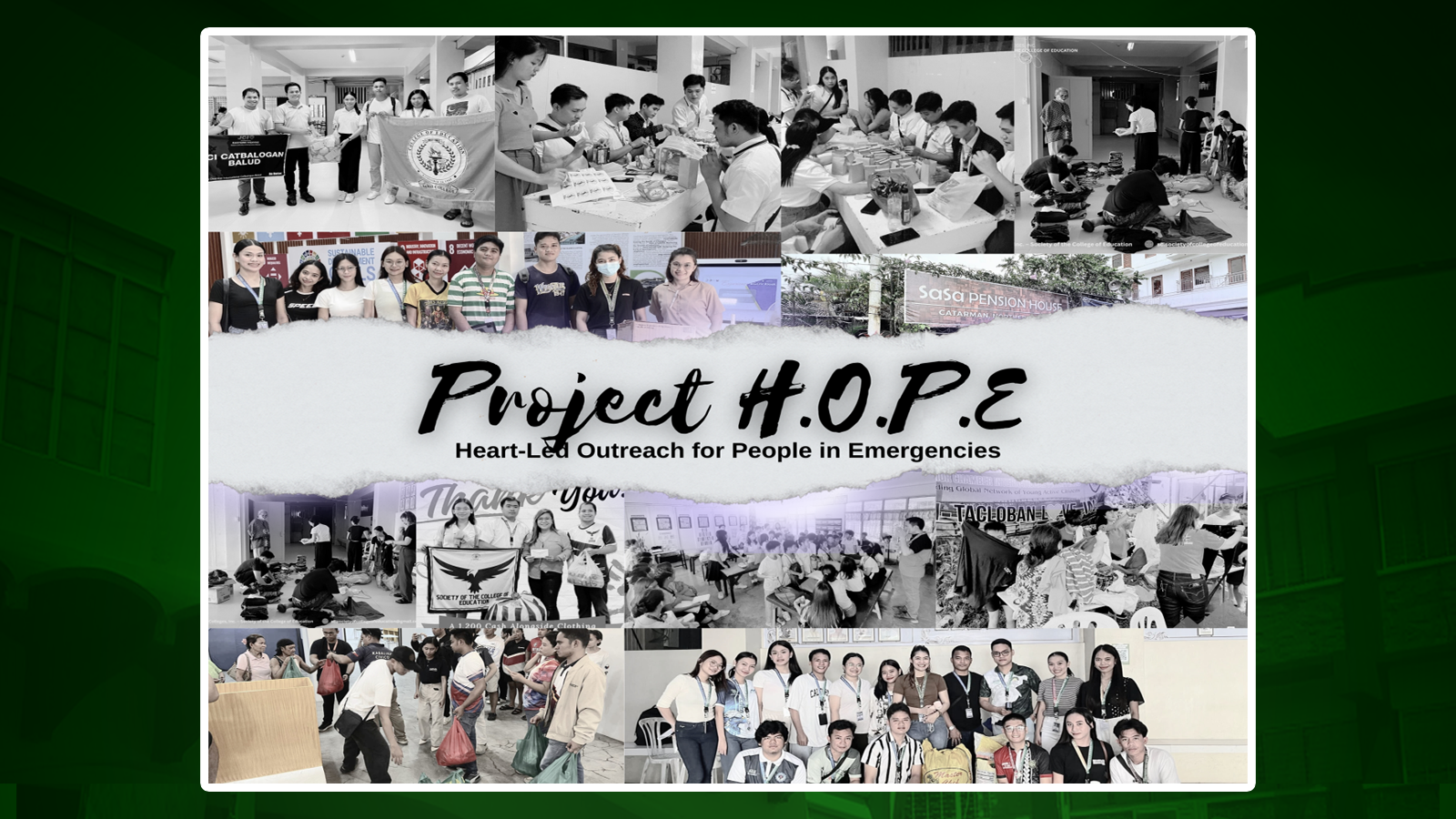
When disaster strikes, it rarely knocks politely. It barges in—tearing roofs from homes, interrupting education, and leaving families to rebuild not only their houses, but their hope. In Catbalogan City and nearby communities, where typhoons, floods, and fires are an all-too-familiar reality, one initiative has quietly become a beacon of compassion and resilience: Project H.O.P.E. (Heart-Led Outreach for People in Emergencies).
Born from the shared vision of educators and students of Samar Colleges, Inc., Project H.O.P.E. began as a simple act of service. In 2023, under the College of Education, faculty members and students launched education-centered outreach programs such as Back to School (BTS) and BAGyanihan para kay KAMADA. These initiatives were rooted in a belief that education must continue—even in the aftermath of disaster. What started as a school-support effort soon evolved into something far greater.
From Classrooms to Crisis Zones
The turning point came as the team witnessed firsthand how disasters magnified poverty, hunger, and learning loss among vulnerable families. Severe Tropical Storm Paeng had displaced hundreds of thousands, and many families struggled to recover long after relief operations ended. For the Project H.O.P.E. team, it became clear: education alone was not enough. Communities needed immediate relief, sustained support, and a system that treated dignity as a priority.
Project H.O.P.E. expanded its mission—moving beyond backpacks and notebooks to food packs, hygiene kits, clothing, and emergency assistance. Today, the program responds to fires, typhoons, and other calamities while ensuring that children can still return to school and families are not left behind. This holistic approach aligns with the United Nations Sustainable Development Goals, particularly No Poverty (SDG 1), Zero Hunger (SDG 2), Quality Education (SDG 4), and Partnerships for the Goals (SDG 17)
Bayanihan in Action
What makes Project H.O.P.E. truly remarkable is not its scale, but its heart. Powered by faculty mentors and education students, the initiative thrives on volunteerism and the Filipino spirit of bayanihan. Students pack relief goods, document distributions, and assist families—learning empathy and leadership far beyond the classroom walls.
This spirit was evident during Pag-asa sa Gitna ng Sunog in October 2025, when Project H.O.P.E., in partnership with JCI Catbalogan Balud, aided 34 families displaced by a fire. Another initiative, Paglaum: Donation Distribution for Typhoon Uwan Victims, extended help to both the Samar Colleges community and residents across Catbalogan City. Each effort reinforced a simple truth: recovery is strongest when communities stand together
Small Resources, Big Impact
Operating with modest financial and technological resources, Project H.O.P.E. relies on donations, partnerships, and careful planning. Coordination happens through social media, messaging apps, and student networks. While challenges such as limited manpower and unpredictable funding persist, adaptability has become the program’s strength.
Rather than one-time relief drives, Project H.O.P.E. functions as a continuous and responsive system, learning from every operation and improving with community feedback. This sustainability has helped build trust—both with beneficiaries and partner organizations.
Hope That Endures
Beyond relief goods and donations, Project H.O.P.E. offers something less tangible but deeply powerful: reassurance. It tells families that they are not alone. It teaches students that education is inseparable from service. And it reminds institutions that real innovation often begins with compassion.
As Project H.O.P.E. looks to the future, plans include disaster-preparedness workshops, stronger partnerships with local government units, and deeper integration of service-learning into academic programs. The vision is clear—to move from reactive aid to proactive resilience, ensuring that hope is not just restored after disasters, but strengthened before the next one arrives.