


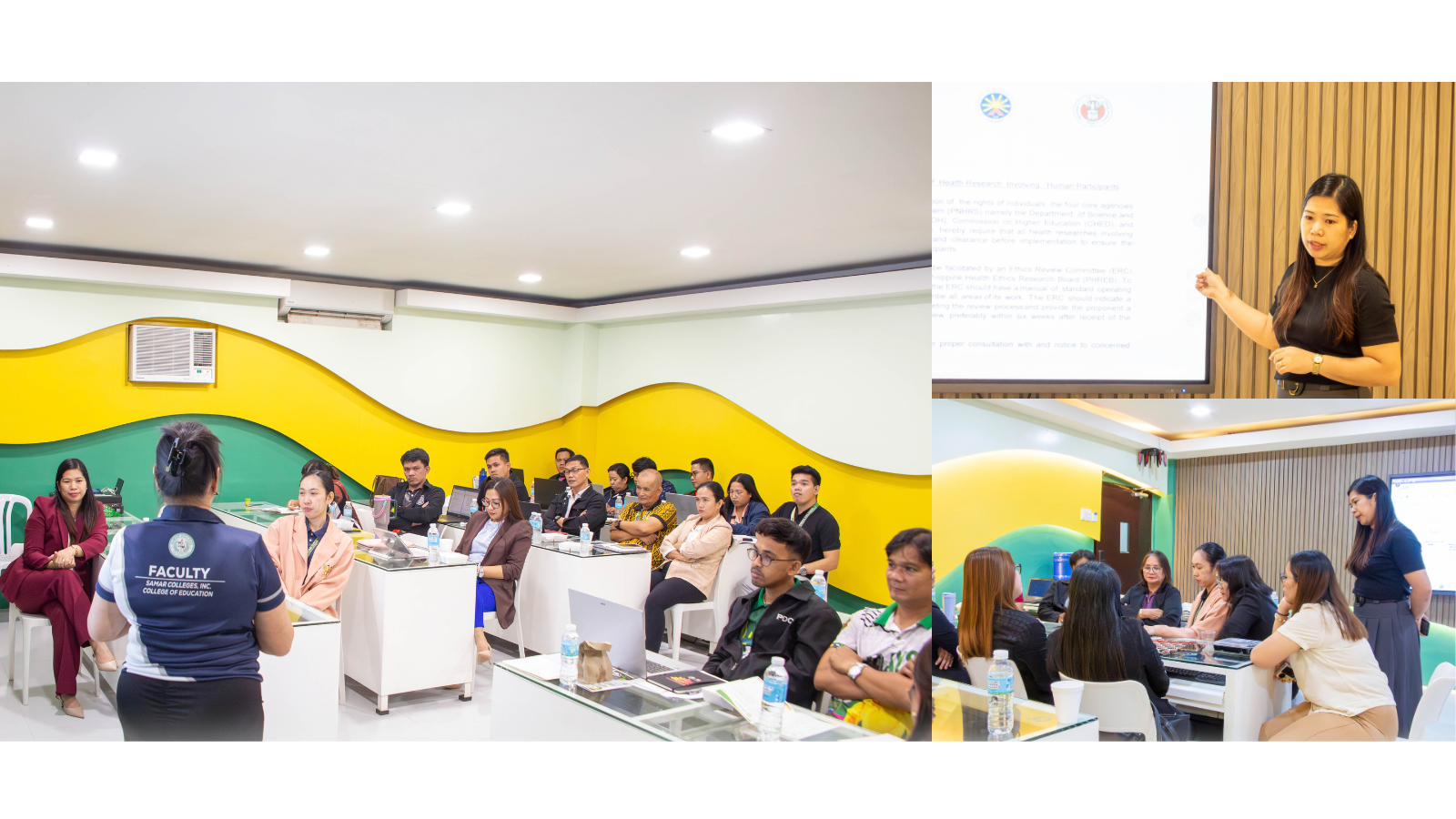
CATBALOGAN CITY, Philippines — Strengthening its commitment to responsible research and quality assurance, Samar Colleges, Inc. conducted a two-day Seminar-Workshop on Research Ethics Review and Accreditation Readiness on September 24–25, 2026, at the Smart Room, 1st Floor, Basic Education Building.
Spearheaded by the Office of the Senior Vice President for Programs Development and Quality Assurance, the activity brought together deans, program heads, coordinators, and faculty members from SCI’s different colleges to strengthen institutional capacity for ethical and responsible research.
Serving as the resource speaker for the two-day seminar-workshop, Dr. Rheajane A. Rosales, Director of the Institutional Human Research Ethics Committee (IHREC) and Associate Professor V of Samar State University, guided participants through research ethics principles, informed consent, protocol review, and institutional ethics review processes.
Through practical workshops, participants conducted simulated reviews, assessed institutional readiness, and developed action plans toward Philippine Health Research Ethics Board (PHREB) accreditation. They also identified members of SCI’s Institutional Ethics Review Committee.
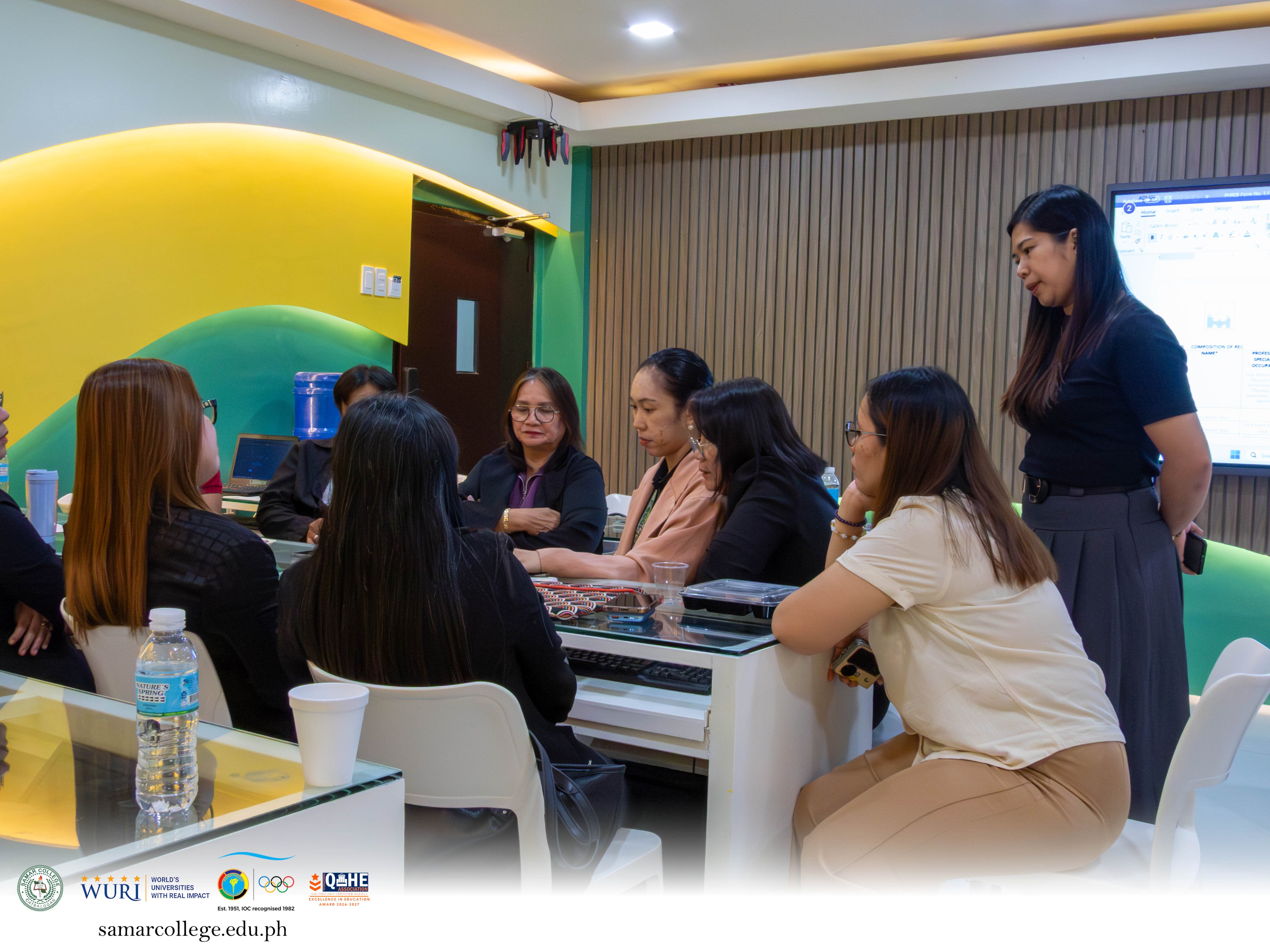
On the first day, discussions on Research Ethics and Elements of Research Ethics provided participants with foundational knowledge on responsible research and the ethical considerations involved in conducting and reviewing research. These concepts were applied through the workshops on “Reviewing Informed Consent” and “Simulated Protocol Review”, where participants examined research-related documents and protocols and presented their outputs for discussion and feedback.
The second day, themed “Institutional Ethics Review Process and PHREB Accreditation Readiness,” then focused on institutional ethics review mechanisms and accreditation requirements. After reviewing the previous day’s key points, participants proceeded to Ethics Review Pathways and Application for PHREB Accreditation, followed by Readiness Gap Analysis and Accreditation Action Planning. The sessions were followed by another two workshops and presentations on Readiness Gap Analysis and Accreditation Action Planning, where participants examined areas for improvement, identified actions toward accreditation readiness, and identified the members of the Institutional Ethics Review Committee (IERC).
The seminar-workshop reinforced SCI’s commitment to research grounded in integrity, accountability, and respect for research participants—strengthening the foundations for quality research and innovation.