17.3.17. Report on SDG 17: Partnerships for the Goals
Strengthening Partnerships with Government Agencies and Regional Institutions
Samar Colleges recognizes the importance of working with government institutions and regional stakeholders in addressing educational, social, economic, and development-related concerns.
Through its participation in government-led activities, consultations, forums, and collaborative initiatives, SCI establishes opportunities for institutional representatives to exchange information, understand regional priorities, and contribute their perspectives as members of the educational sector.
One example is the institution's engagement with the Philippine Statistics Authority (PSA). On November 7, 2025, SCI received a plaque of recognition during the 2025 Quarterly Survey of Philippine Business and Industry (QSPBI) Recognition Activity held at Summit Hotel, Tacloban City. The recognition acknowledged the institution's valuable support in the implementation of the survey, with SCI being recognized as the lone awardee from Catbalogan City.
SCI also participated in the PSA's 2024 Community-Based Monitoring System (CBMS) Preliminary Results for Selected Municipalities cum Stakeholders Forum on March 26, 2025, at Samar State University's Convention Center in Catbalogan City. The activity provided an opportunity for stakeholders to receive and discuss preliminary community-based statistical information relevant to local development planning.
On the same date, institutional representatives also attended the 2025 First Quarter Provincial Statistics Committee Meeting, a regional coordination activity involving stakeholders engaged in statistical development and information-sharing.
These engagements demonstrate SCI's participation in government-led statistical initiatives and its recognition of the importance of reliable data in understanding community conditions and supporting development planning.
The institution also maintains engagement with the Commission on Higher Education Regional Office VIII through program monitoring, compliance activities, and professional development initiatives. These interactions provide opportunities for SCI to align its academic and institutional practices with government standards and participate in regional educational development.
Facilitating Cross-Sectoral Dialogue and Collaborative Development Initiatives
Samar Colleges recognizes that complex development concerns cannot be addressed by educational institutions, government agencies, or industries working independently. Effective solutions require dialogue among stakeholders with different expertise, resources, and responsibilities.
In this regard, SCI participates in cross-sectoral initiatives that bring together representatives from education, government, business, industry, civil society, and other sectors.
A significant example is the institution's involvement in the USWAG Eastern Visayas Startup Consortium, a regional initiative that brings together stakeholders in the startup and innovation ecosystem.
SCI participated in the consortium's initial gathering and ceremonial signing of the Memorandum of Agreement in 2025, establishing its involvement in a collaborative network intended to strengthen startup development and innovation in Eastern Visayas.
The institution continued its participation in the consortium through the 2nd Startup Eastern Visayas Regional Conference on July 6, 2026, at Summit Hotel, Tacloban City. This participation reinforced SCI's commitment to engaging with regional stakeholders in promoting innovation, entrepreneurship, and opportunities for startup development.
Through these engagements, SCI contributes its perspective as an educational institution and strengthens its connections with organizations involved in developing the region's innovation ecosystem.
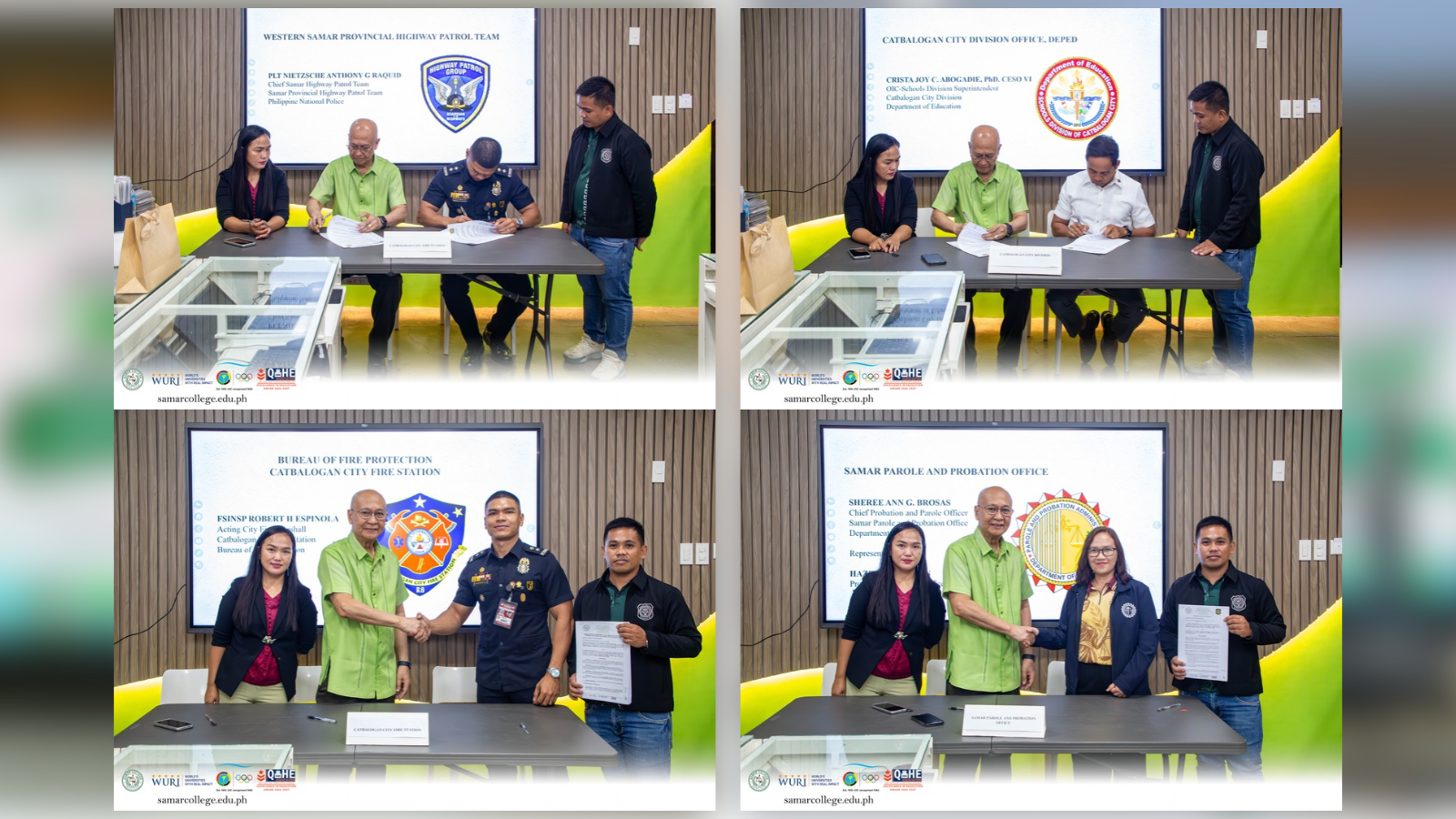
Another example is PROGRAM CONNECT: Community Network for Continuity of Learning, a partnership among Samar Colleges, Inc., the Schools Division Office of Catbalogan City, and Eastern Visayas Regional Science High School (EVRSHS).
Formalized through a Memorandum of Agreement in September 2026, the program brings together institutional learning resources, digital technology, and academic interventions to support learning continuity. Through the partnership, SCI shares its ResiLearn Learning Management System and related instructional resources with its partner school.
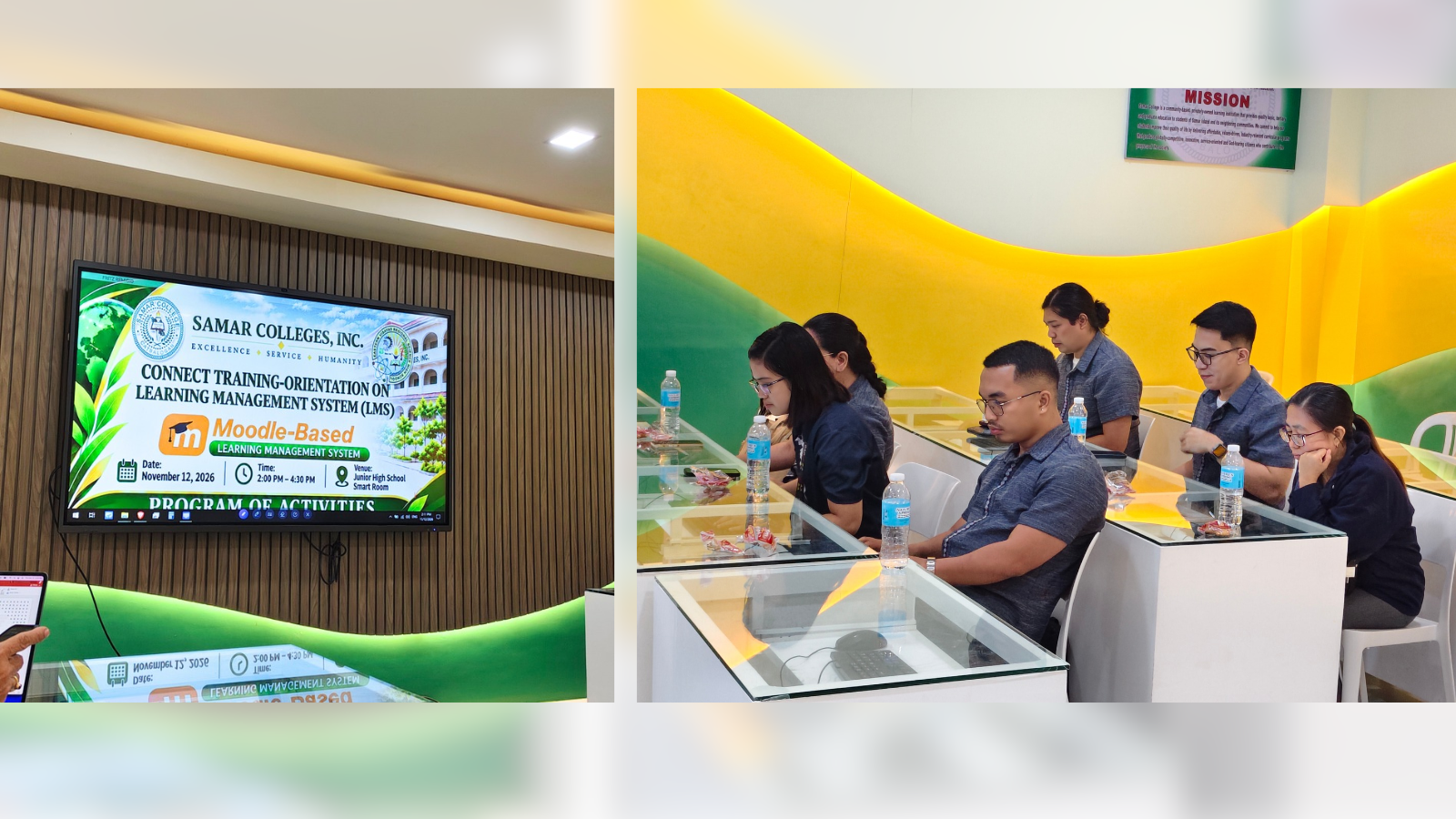
On November 12, 2026, SCI conducted an LMS training-orientation for six representatives of EVRSHS, introducing them to the platform and its functions as an initial step toward extending digital learning opportunities beyond the institution.
PROGRAM CONNECT demonstrates how an educational institution can collaborate with government education authorities and another school to address shared concerns, particularly the need to sustain learning despite disruptions and limitations in access to instructional resources.
Building International Academic Partnerships and Global Engagement
Recognizing that sustainable development requires knowledge exchange and cooperation beyond national boundaries, Samar Colleges continues to strengthen its international academic linkages.
One of its significant international partnerships is with Dong Thap University (DThU), Vietnam, formalized through a Memorandum of Understanding signed in October 2024.
The partnership paved the way for SCI's first international student exchange program. From March 16 to 21, 2025, two fourth-year Education students, Christian Paul M. Salentes and Miguelito M. Tapia Jr., represented Samar Colleges in Vietnam. Their participation included academic and cultural activities, classroom observations, campus engagement, and interactions with local students and communities.
The international engagement continued on July 23, 2025, when Samar Colleges hosted twenty-one Master of Arts in Education (English) students from Dong Thap University for an academic field visit at the SC Auditorium. The visit provided an opportunity for academic interaction, cultural exchange, and the sharing of educational perspectives among the participating institutions.
SCI also expanded its international academic engagement through its affiliation with Ethos Universitas, an Italy-based international university platform that promotes ethical leadership, academic integrity, and social responsibility among higher education institutions.
On January 27, 2026, Samar Colleges officially joined Ethos Universitas as an Honorary Companion. The institution became the only higher education institution from Eastern Visayas among the seventeen Philippine HEIs then affiliated with the platform.
Through this affiliation, SCI became part of an international academic network that provides opportunities for dialogue, collaboration, and values-based initiatives. The membership further strengthens the institution's efforts to connect its educational mission with global perspectives on ethics, integrity, and responsible institutional leadership.
Collaborating with Non-Government Organizations for Community Development
Samar Colleges recognizes the important role of non-government organizations in mobilizing communities, providing specialized expertise, and implementing initiatives that respond to local development needs.
Through its academic departments, student organizations, and community engagement activities, SCI works with partner organizations to undertake initiatives that promote education, environmental protection, humanitarian assistance, and community welfare.
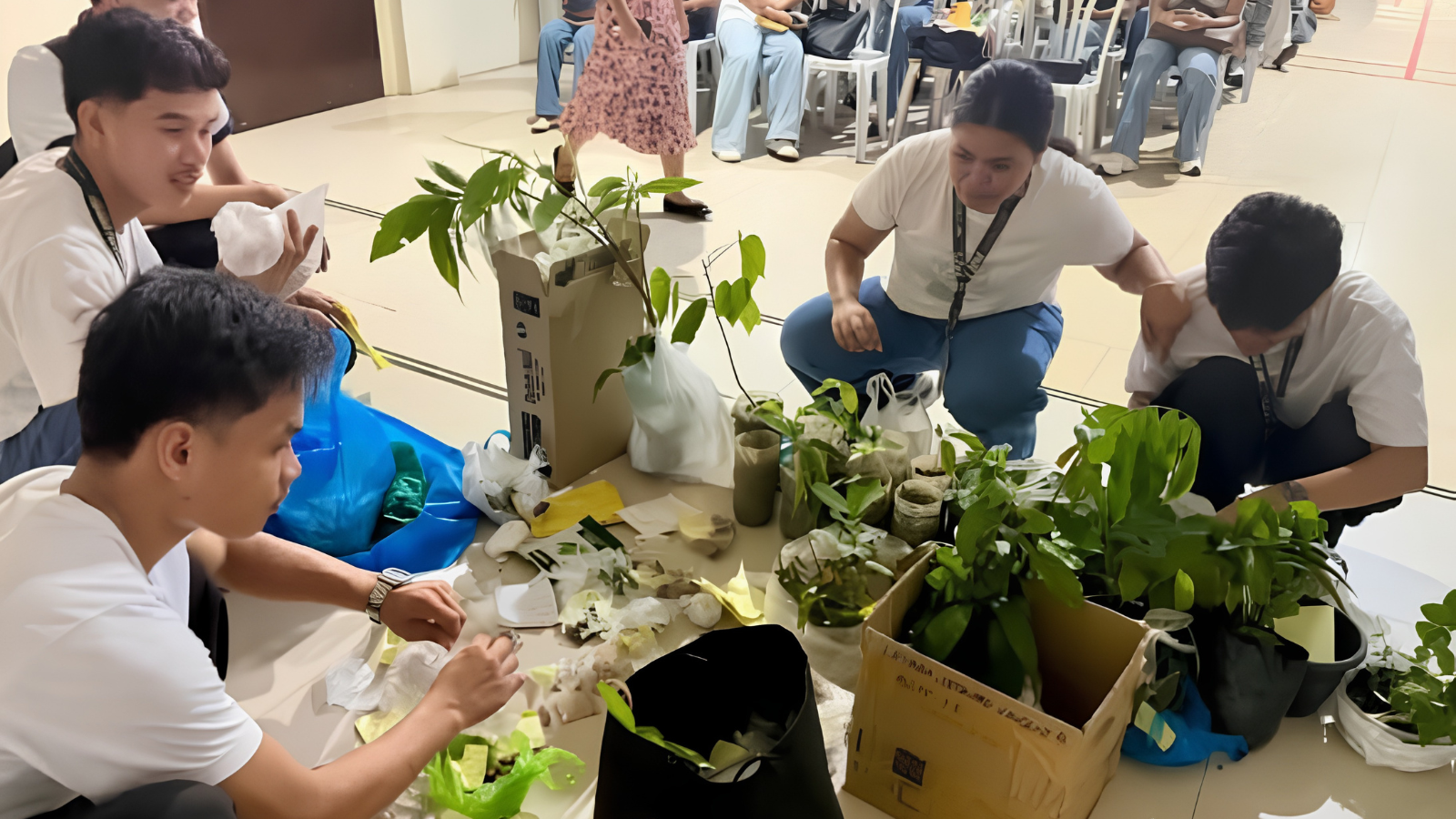
One example is Shields of the Shore, a community-based mangrove rehabilitation initiative implemented through the College of Education. The project began in September 2022 and has involved mangrove rehabilitation activities in Estaka, Payao, and Cabugawan in Catbalogan City.
The initiative has engaged community members, institutional volunteers, and environmental partners in efforts to support coastal protection and mangrove restoration. The Department of Environment and Natural Resources and the Community Environment and Natural Resources Office have provided technical guidance and monitoring support, while Lantaw Pitad, Inc. joined the initiative as an NGO partner in 2025.
The collaboration expanded through subsequent activities, including the participation of SCI's GADvocates in a mangrove-planting activity during National Women's Month in 2026. This engagement connected environmental conservation with women's participation and community development.
Another example is Project H.O.P.E. (Heart-Led Outreach for People in Emergencies), an initiative of the College of Education that has developed through collaboration with organizations such as Junior Chamber International (JCI).
On October 2, 2025, SCI partnered with JCI Catbalogan Balud in conducting “Pag-asa sa Gitna ng Sunog,” a humanitarian assistance activity for families affected by a fire incident. The initiative reached 152 individuals from 34 families temporarily staying at the evacuation center of Our Lady of Salvacion Church. Food packs, clothing, school supplies, hygiene kits, and monetary assistance were provided through the collaborative efforts of the partner organizations, faculty members, and student volunteers.
Supporting Institutional and Community Development Through Strategic Partnerships
Beyond specific projects and community activities, Samar Colleges recognizes partnerships as an important means of strengthening institutional capacity and supporting regional development.
The institution's collaboration with government agencies, private organizations, professional associations, and other educational institutions provides opportunities for capacity-building, technical assistance, knowledge exchange, and the sharing of institutional resources.
These relationships contribute to the development of academic programs, instructional innovations, research capabilities, community extension initiatives, and institutional quality assurance.
The Programs Development and Quality Assurance Office also identifies strategic partnerships as an important institutional priority, particularly in strengthening internationalization, networking capabilities, research, accreditation, and community engagement.
Through these collaborations, SCI seeks to establish relationships that go beyond ceremonial agreements and lead to actual activities, shared responsibilities, and mutually beneficial outcomes.
Promoting Education and Awareness on the Sustainable Development Goals
Samar Colleges recognizes that partnerships for sustainable development must be supported by awareness, understanding, and active participation in the Sustainable Development Goals.
As an educational institution, SCI has an important role in helping students, faculty members, employees, and partner communities understand the global development agenda and recognize how their respective activities contribute to sustainable development.
Through its academic programs, institutional activities, seminars, community engagements, and sustainability initiatives, the institution provides opportunities to integrate SDG-related discussions into learning and development activities.
The institution also conducts information-sharing and capacity-building activities to strengthen the understanding of sustainability frameworks among its personnel and academic units.
One example is the institution's re-echo activities in preparation for the 2027 Times Higher Education Impact Ratings and World University Rankings for Innovation (WURI). On October 26, 2026, Samar Colleges conducted an institutional re-echo activity to familiarize participating offices and academic units with the requirements, indicators, and evidence needed for the upcoming submissions.
During the activity, the participating offices discussed selected SDGs, including SDG 5, SDG 10, SDG 16, and SDG 17, as well as the importance of identifying and documenting institutional programs and practices that contribute to sustainable development.
Through these activities, SCI encourages institutional units to recognize that sustainability is not the responsibility of a single office. It requires coordinated participation, documentation, and implementation across the institution.
Publishing and Communicating Institutional Contributions to the SDGs
Through its official website and institutional communication channels, SCI publishes news articles, project updates, partnership announcements, and reports documenting its academic, research, innovation, and community engagement activities.
The institution's dedicated sustainability section also provides a platform for presenting its work in relation to the Sustainable Development Goals. Through this platform, SCI organizes its institutional contributions according to the relevant SDGs and their corresponding indicators.
The preparation and publication of SDG reports further strengthen the institution's commitment to transparency and evidence-based sustainability reporting. By documenting the objectives, implementation, partners, beneficiaries, and outcomes of its initiatives, SCI seeks to make its contributions more visible and accessible to its stakeholders.
Accomplishments and Continuing Commitment to Partnerships for the Goals
Samar Colleges' contributions to SDG 17 are demonstrated through its growing network of partnerships with government agencies, educational institutions, industries, non-government organizations, professional associations, and international academic platforms.
Among its notable collaborative initiatives are the USWAG Eastern Visayas Startup Consortium, PROGRAM CONNECT with SDO-Catbalogan City and EVRSHS, the academic partnership with Dong Thap University in Vietnam, its affiliation with Ethos Universitas, Shields of the Shore with Lantaw Pitad, Inc., and Project H.O.P.E. with JCI partners.
These engagements demonstrate the institution's continuing efforts to share resources, exchange knowledge, strengthen institutional capabilities, and participate in collaborative responses to educational, environmental, economic, and community development concerns.
Through meaningful cooperation and shared responsibility, SCI seeks to contribute to a network of institutions and communities working together toward a more inclusive, innovative, peaceful, and sustainable future.