17.4.1. Commitment to Meaningful Education
|
Samar Colleges, Inc. (SCI) recognizes education as a vital instrument in advancing sustainable development and preparing learners to respond to the challenges and needs of society. As an institution committed to providing relevant, values-driven, and quality education, SCI recognizes the importance of equipping students with the knowledge, competencies, and values necessary to contribute to a more inclusive and sustainable future. SCI Strategic Development Plan (2025–2035)This commitment is reflected in the SCI Strategic Development Plan 2025–2035, anchored on the strategic theme, “Advancing Sustainability, Innovation, Relevance, and Empowering People”. Through this long-term framework, sustainability is recognized as an important consideration in the institution's development, particularly in strengthening academic programs and developing future-ready learners. See the SCI Strategic Development Plan here. |
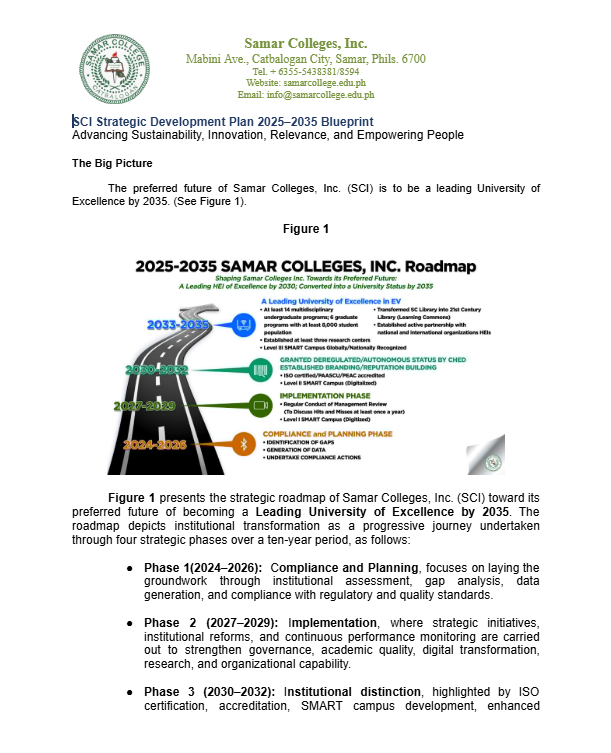
Cover Page of SCI’s Strategic Development Plan for 2025–2035 |
A significant expression of this commitment is found in Pillar 2: Developing Learners and Goal 2.1 – Deliver Transformative, Outcomes-Based, Learner-Centered Academic Programs Responsive to National and Global Needs.
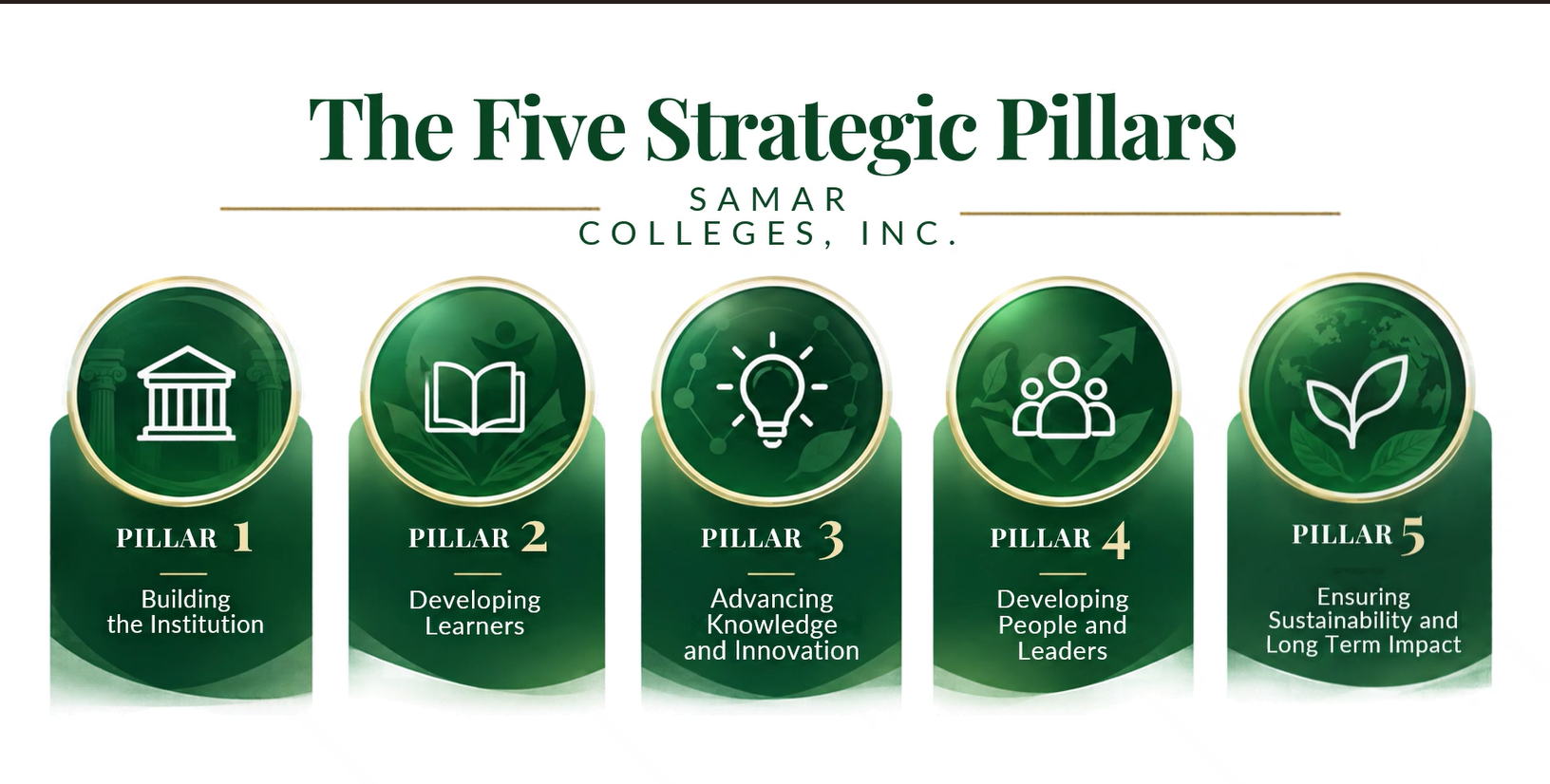
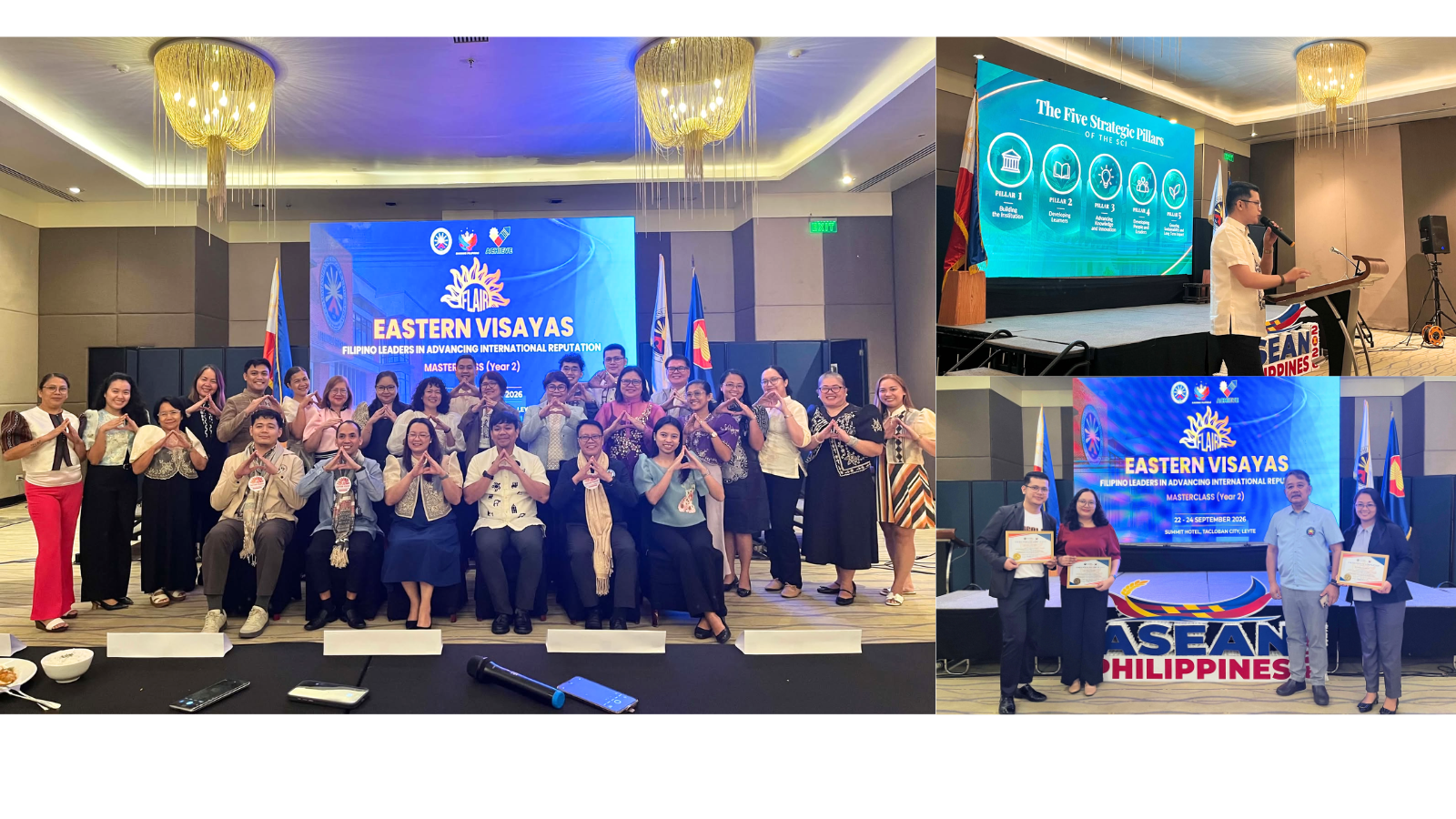
The Strategic Development Plan 2025–2035 is operationalized through five interconnected strategic pillars that guide SCI's institutional transformation: Building the Institution; Developing Learners; Advancing Knowledge and Innovation; Developing People and Leaders; and Ensuring Sustainability and Long-Term Impact.
 |
Of particular relevance to education for the SDGs is Pillar 2: Developing Learners, which emphasizes the development of competent, globally competitive, and lifelong learners equipped with the knowledge, skills, values, and adaptability necessary to thrive in an increasingly dynamic world. This pillar underscores SCI's commitment to developing graduates who can respond to emerging societal concerns, exercise responsible citizenship, and contribute meaningfully to their respective professions and communities. |
Institutional Commitment and Strategic Direction
SCI's commitment to meaningful education for sustainable development is further articulated in Goal 2.1 – Deliver Transformative, Outcomes-Based, Learner-Centered Academic Programs Responsive to National and Global Needs.
Under this goal, the Strategic Development Plan identifies the integration of digital literacy, artificial intelligence, entrepreneurship, sustainability, and global competencies across all academic programs as an institutional strategy. This provision establishes a clear direction for incorporating sustainability into academic development and ensuring that learning remains responsive to both national priorities and global development concerns.
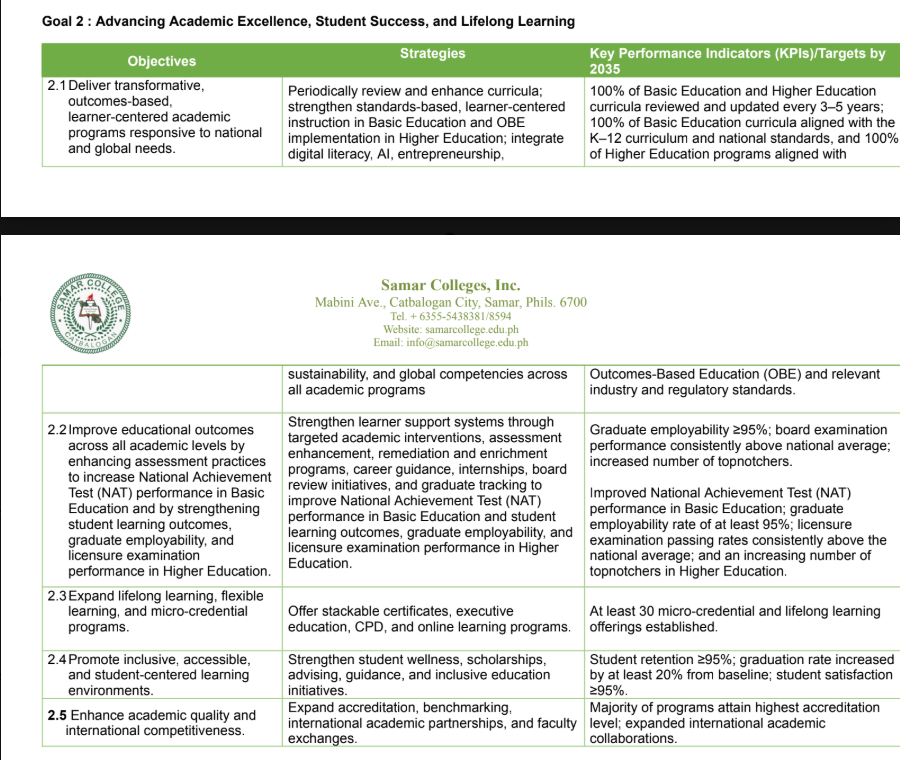
Page 10 of SCI’s Strategic Development Plan for 2025–2035
The plan further emphasizes the periodic review and enhancement of curricula, the strengthening of outcomes-based education, and the delivery of learner-centered instruction across Basic Education and Higher Education. These strategies provide an institutional basis for continuously improving academic programmes and making relevant competencies, including sustainability, part of the intended development of learners.
The institution's commitment is further reinforced by Goal 1.8, which identifies the alignment of institutional initiatives with national development priorities and the United Nations Sustainable Development Goals as part of SCI's strategic direction toward university readiness.
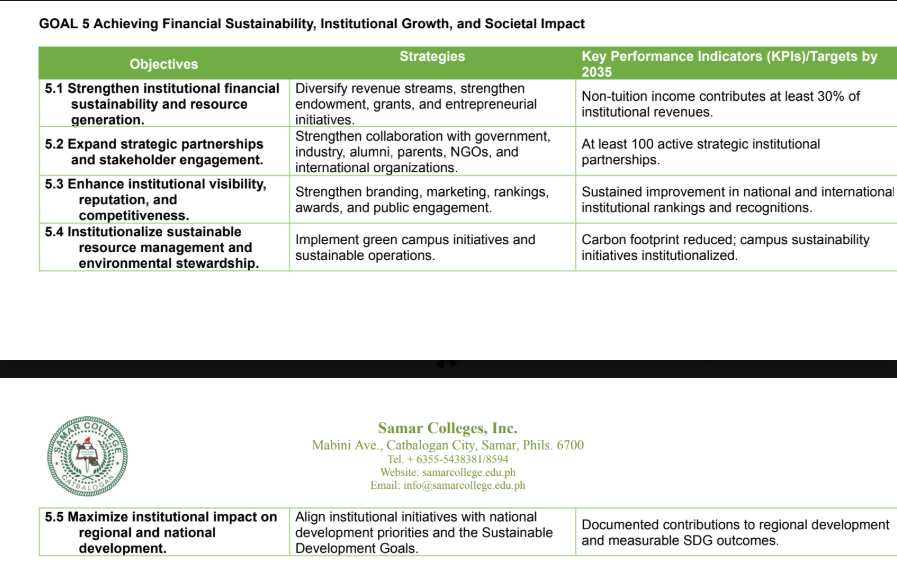
Page 12 of SCI’s Strategic Development Plan for 2025–2035 showing Goal 5.5
Similarly, Goal 5.5 emphasizes maximizing the institution's contribution to regional and national development through initiatives aligned with national development priorities and the SDGs, with documented contributions to regional development and measurable SDG outcomes as its intended target.
These provisions demonstrate that SCI considers the Sustainable Development Goals within its broader institutional planning and long-term development agenda.
Integrating Sustainability into Academic Programs
The Strategic Development Plan specifically identifies the integration of sustainability and global competencies across all academic programs as one of SCI's educational strategies. This direction establishes the institution's commitment to making sustainability relevant to students' academic development and learning experiences, while recognizing the importance of preparing graduates who can respond to emerging societal and global concerns.
|
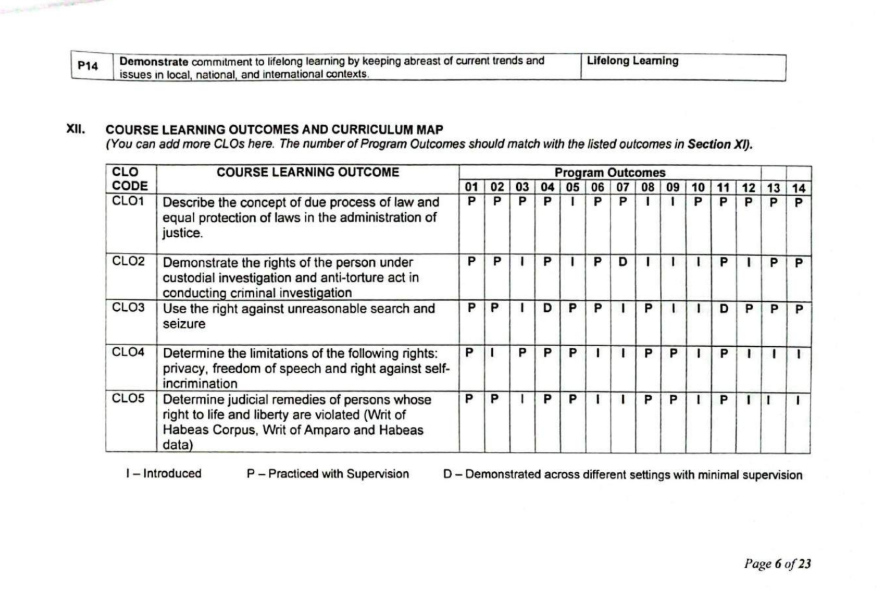 |
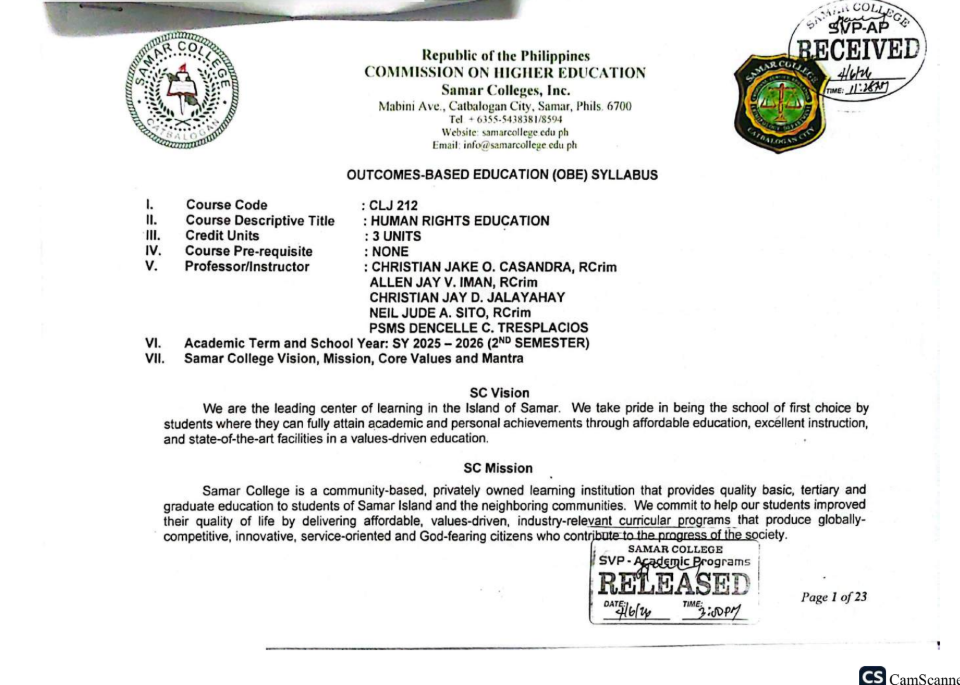
Sample Contents of the Syllabus for CLJ 212 – Human Rights Education
For instance, the Bachelor of Science in Criminology program includes CLJ 212 – Human Rights Education, which exposes students to fundamental human rights principles, economic, social and cultural rights, international human rights instruments, and the mechanisms of the United Nations for the protection and promotion of human rights.
The course is further supported by Program Outcomes emphasizing ethical and moral responsibility, responsible citizenship, human rights awareness, and meaningful participation in community development. Through these learning areas, students develop an understanding of the importance of human dignity, equality, justice, and accountable institutions—concerns closely associated with SDG 10 (Reduced Inequalities) and SDG 16 (Peace, Justice and Strong Institutions).
 |
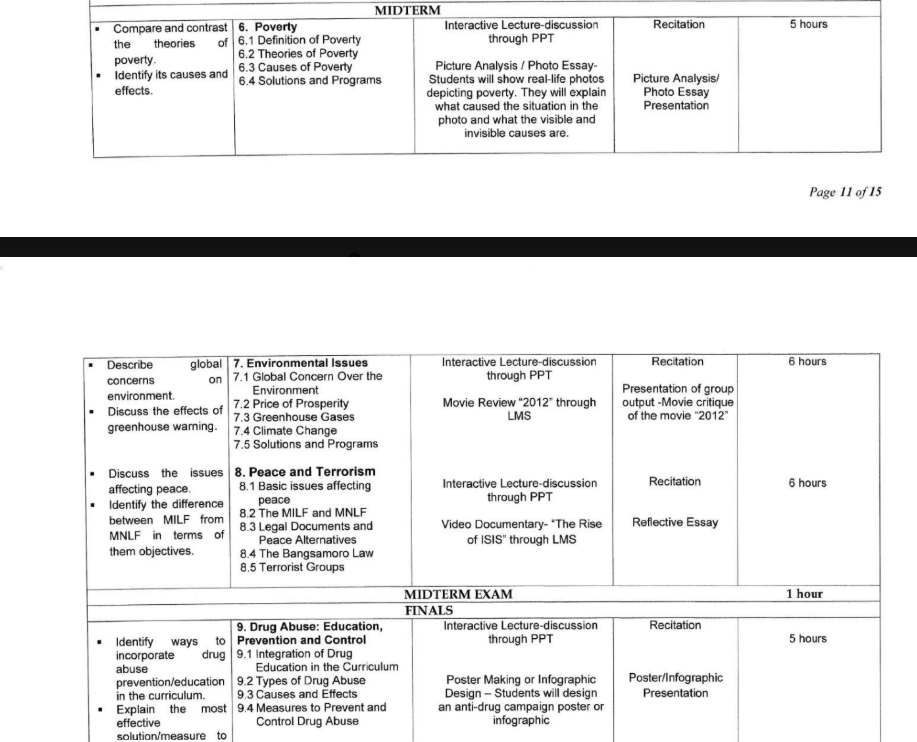 |
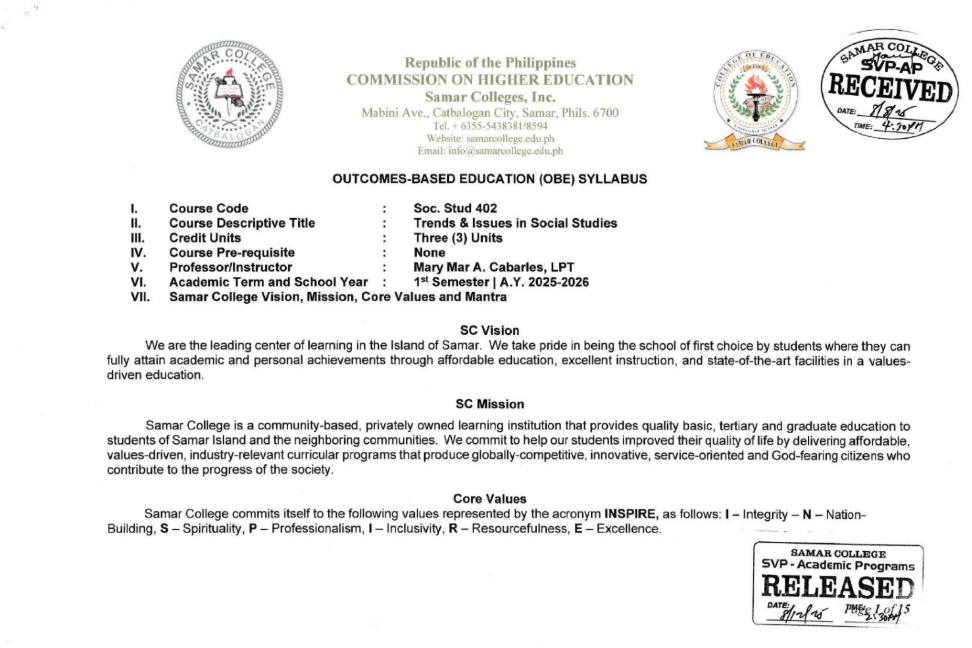
Sample Contents of the Syllabus for Soc. Stud. 402 – Trends & Issues in Social Studies
Similarly, the College of Education, through Soc. Stud 402 – Trends & Issues in Social Studies, incorporates sustainability-related concerns into the preparation of future educators. The course addresses poverty, environmental issues, climate change, peace and conflict, drug abuse prevention, and other contemporary social challenges, providing students with opportunities to examine issues relevant to the Sustainable Development Goals.
Beyond classroom discussions, the syllabus integrates learning activities and assessments that encourage critical analysis and social awareness. These learning experiences support the development of socially responsible and informed future educators while contributing to the educational objectives associated with SDG 1 (No Poverty), SDG 3 (Good Health and Well-being), SDG 13 (Climate Action), and SDG 16 (Peace, Justice and Strong Institutions).
The courses presented above are selected examples of SCI's broader efforts to integrate sustainability-related concepts into its academic curricula. These are complemented by other approved course syllabi across the institution's various academic disciplines, which likewise incorporate relevant topics, learning outcomes, and instructional activities addressing different dimensions of sustainable development.