17.4.2. Specific Courses on Sustainability
Samar Colleges, Inc. (SCI) recognizes the vital role of education in advancing sustainable development. Beyond providing students with disciplinary knowledge and professional competencies, the institution seeks to develop graduates who are socially responsible, environmentally conscious, and responsive to the needs and challenges of their communities.
In support of this commitment, SCI integrates sustainability-related principles and themes into its academic programs and curricular offerings. Through its diverse fields of study, the institution provides learning opportunities that encourage students to understand pressing societal concerns, appreciate the interconnectedness of social, economic, and environmental issues, and recognize their roles in contributing to a more inclusive, equitable, and sustainable society.
List of Program Offerings
| Academic Programs | Most Dominant SDG Theme |
|---|---|
College of Education
|
SDG 4 – Quality Education |
College of Business and Management
|
SDG 8 – Decent Work and Economic Growth |
| College of Liberal Arts and Sciences | SDG 10 – Reduced Inequalities |
| College of Information Technology and Allied Sciences | SDG 9 – Industry, Innovation and Infrastructure |
| College of Criminal Justice Education | SDG 16 – Peace, Justice and Strong Institutions |
The contribution of Samar Colleges, Inc. to sustainable development goes beyond the availability of academic programs aligned with various Sustainable Development Goals. More importantly, these commitments find expression in what students are expected to learn, understand, and apply throughout their academic journey.
At SCI, the pursuit of quality education is connected to the development of knowledge, competencies, and values that respond to the realities of society. This is reflected in the institution's approved curricula, where selected courses address issues such as environmental protection, climate change, social inequalities, responsible resource management, and other concerns that shape the sustainability of communities.
1. Environmental Science
Samar Colleges, Inc. incorporates environmental sustainability into its teacher education curriculum through Environmental Science, a three-unit major course under the Bachelor of Secondary Education (BSEd) major in Science program.
The course deals with the general concepts and principles governing the interactions between the physical environment and biological communities on Earth. It also gives emphasis to current environmental issues and concerns, as well as disaster risk management. This course description establishes environmental understanding and the relationship between human and natural systems as central components of the subject.
The course's sustainability orientation is further demonstrated through its four Course Learning Outcomes (CLOs). Students are expected to:
- Identify and define major environmental concepts, including ecosystems, biodiversity, natural resources, and pollution;
- Explain the interconnections between human activities and the environment;
- Propose sustainable solutions to local or global environmental problems and demonstrate commitment to environmentally friendly practices in their daily lives and communities; and
- Recognize and appreciate the importance of environmental stewardship and ethical decision-making in addressing environmental challenges.
These learning outcomes are supported by a course outline that allocates instructional time to specific environmental and ecological topics. Among those covered are the components of ecosystems, ecological interactions, biogeochemical cycles, population dynamics, the impact of population growth on the environment, human intervention with nature, and the relationship between energy and the environment.
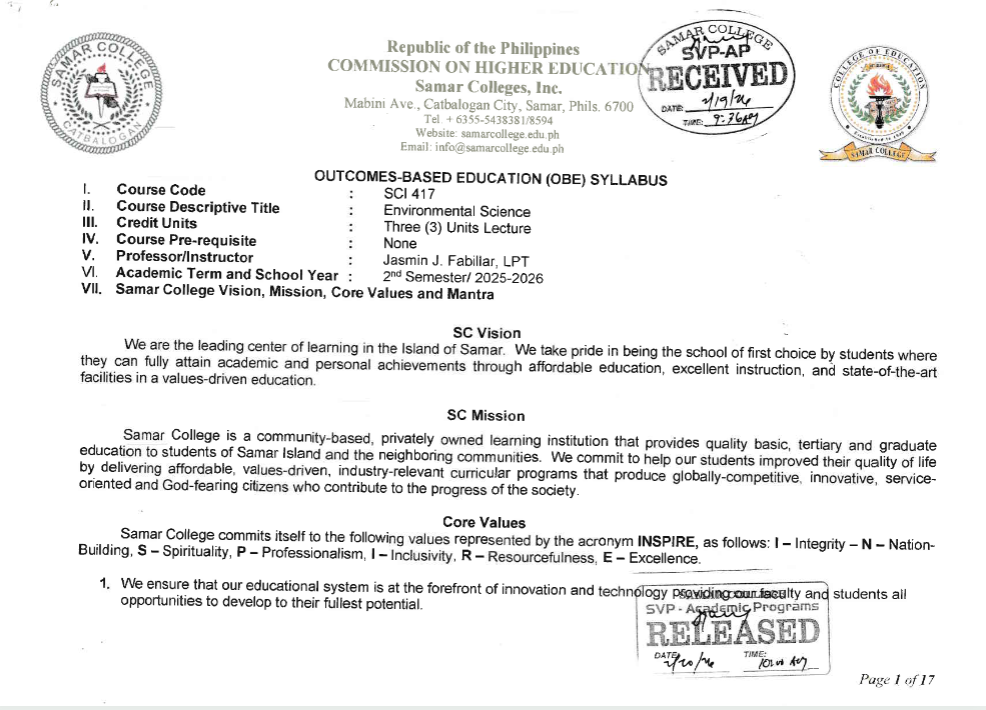
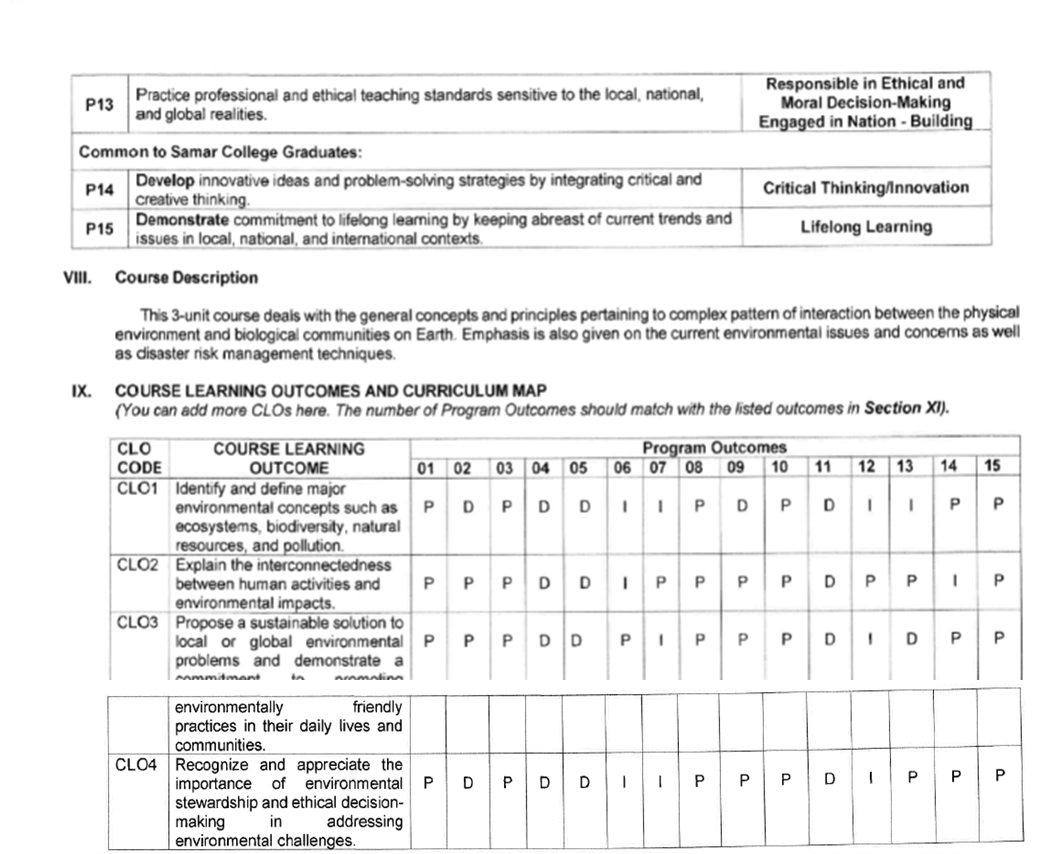
Supporting excerpts from the approved Environmental Science syllabus (page 3 of the source document).
The syllabus, for instance, allocates seven hours to the basic units of ecology, eight hours to ecological interactions and biogeochemical cycles, nine hours to population, and another eight hours to the impact of population growth on the environment. Its strongest and most direct contributions are associated with SDG 13 (Climate Action) and SDG 15 (Life on Land), particularly through the course's treatment of environmental concerns, ecosystems, biodiversity, and environmental stewardship.
See the approved Syllabus here: Environmental Science
Its strongest and most direct contributions are associated with SDG 13 (Climate Action) and SDG 15 (Life on Land), particularly through the course's treatment of environmental concerns, ecosystems, biodiversity, and environmental stewardship.
2. Trends and Issues in Social Studies
SCI also recognizes that sustainable development involves understanding the broader social and economic conditions that shape communities. This perspective is reflected in the Bachelor of Secondary Education (BSEd) major in Social Studies program through Trends and Issues in Social Studies, a three-unit course included in the approved curriculum.
The course examines contemporary issues in a rapidly changing society, covering concerns such as poverty, population growth, human rights, peace and terrorism, environmental issues, and other social problems. These subject areas allow students to examine how social, economic, cultural, and environmental challenges are interconnected and how they affect the well-being and development of communities.
Environmental sustainability is specifically addressed through discussions on global environmental concerns, the price of prosperity, greenhouse gases, climate change, and environmental solutions and programs. These topics provide students with opportunities to understand the environmental consequences of human activities and consider possible responses to emerging environmental challenges.
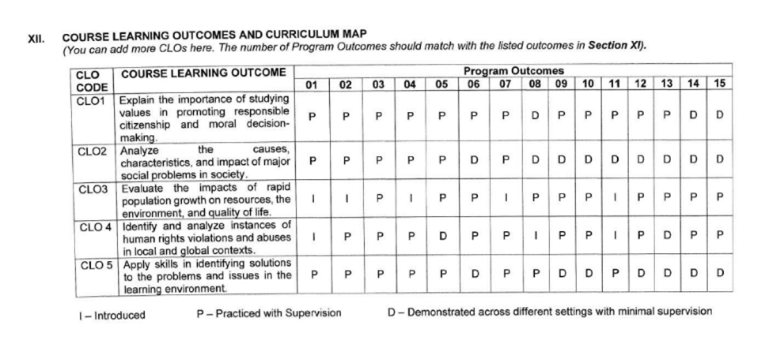
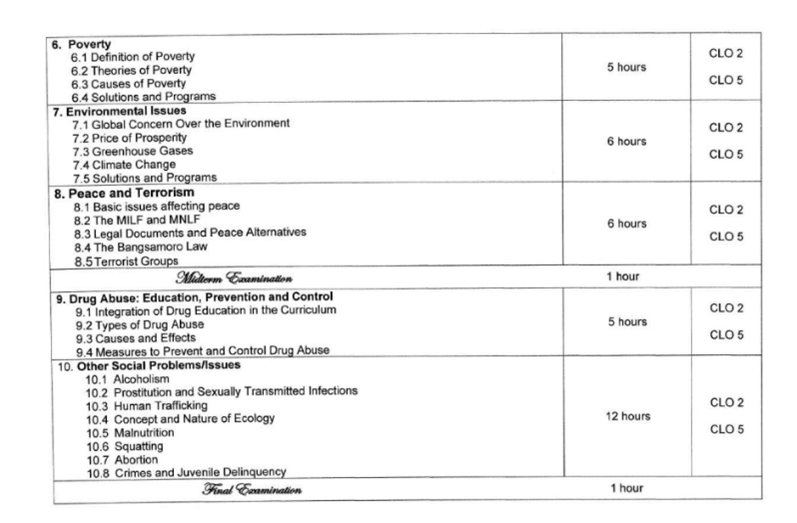
Supporting course-outline excerpt from the approved Trends and Issues in Social Studies syllabus (page 4).
The course learning outcomes further reinforce this orientation. Students are expected to analyze the causes, characteristics, and impacts of major social problems; evaluate the effects of rapid population growth on resources, the environment, and quality of life; identify and analyze the effects of human rights violations and abuses; and apply skills in identifying solutions to problems and issues in society.
Through these curricular components, SCI extends sustainability-related learning beyond environmental science and into the social dimensions of development.
See the approved Syllabus here: Trends and Issues in Social Studies
3. Human Rights Education
Extending its curricular integration of sustainability-related concerns to the field of criminal justice, Samar Colleges, Inc. (SCI) also incorporates human rights education into its Bachelor of Science in Criminology program through the course Human Rights Education.
| The course introduces students to the principles, development, and institutional mechanisms of human rights protection. As reflected in the approved course syllabus, students are expected to understand the international development of human rights, the role of the United Nations and its principal organs, and the Universal Declaration of Human Rights, including its preamble and 30 articles. The course also covers the Commission on Human Rights, the UN Human Rights Council, and the procedures for filing human rights complaints. |  |
Beyond familiarizing students with international human rights instruments and institutions, the course requires them to demonstrate their understanding of human rights principles and apply this knowledge in analyzing international human rights frameworks. Its learning activities include lecture-discussions, pre-made video discussions, online classes, recitations, quizzes, and task-based activities, providing different opportunities for students to engage with the subject matter.
Through this curricular offering, SCI prepares future criminology professionals to appreciate the importance of human dignity, recognize human rights violations, and understand the mechanisms established to protect and uphold fundamental rights. This contributes to the development of justice-oriented and socially responsible graduates whose professional practice can support the promotion of SDG 16 – Peace, Justice and Strong Institutions, particularly in advancing human rights, access to justice, and accountable institutions.
See the approved Syllabus here: Human Rights Education
Extending Sustainability Education through the National Service Training Program (NSTP)
Beyond its regular academic courses, Samar Colleges, Inc. also provides students with opportunities to develop civic responsibility and social awareness through the National Service Training Program (NSTP), including its Civic Welfare Training Service (CWTS) and Reserve Officers' Training Corps (ROTC).
| Through the Reserve Officers' Training Corps (ROTC), SCI provides students with structured training that develops discipline, leadership, civic consciousness, and a sense of responsibility toward the nation. The program reinforces the importance of responsible citizenship, service, preparedness, and participation in national development. |  |
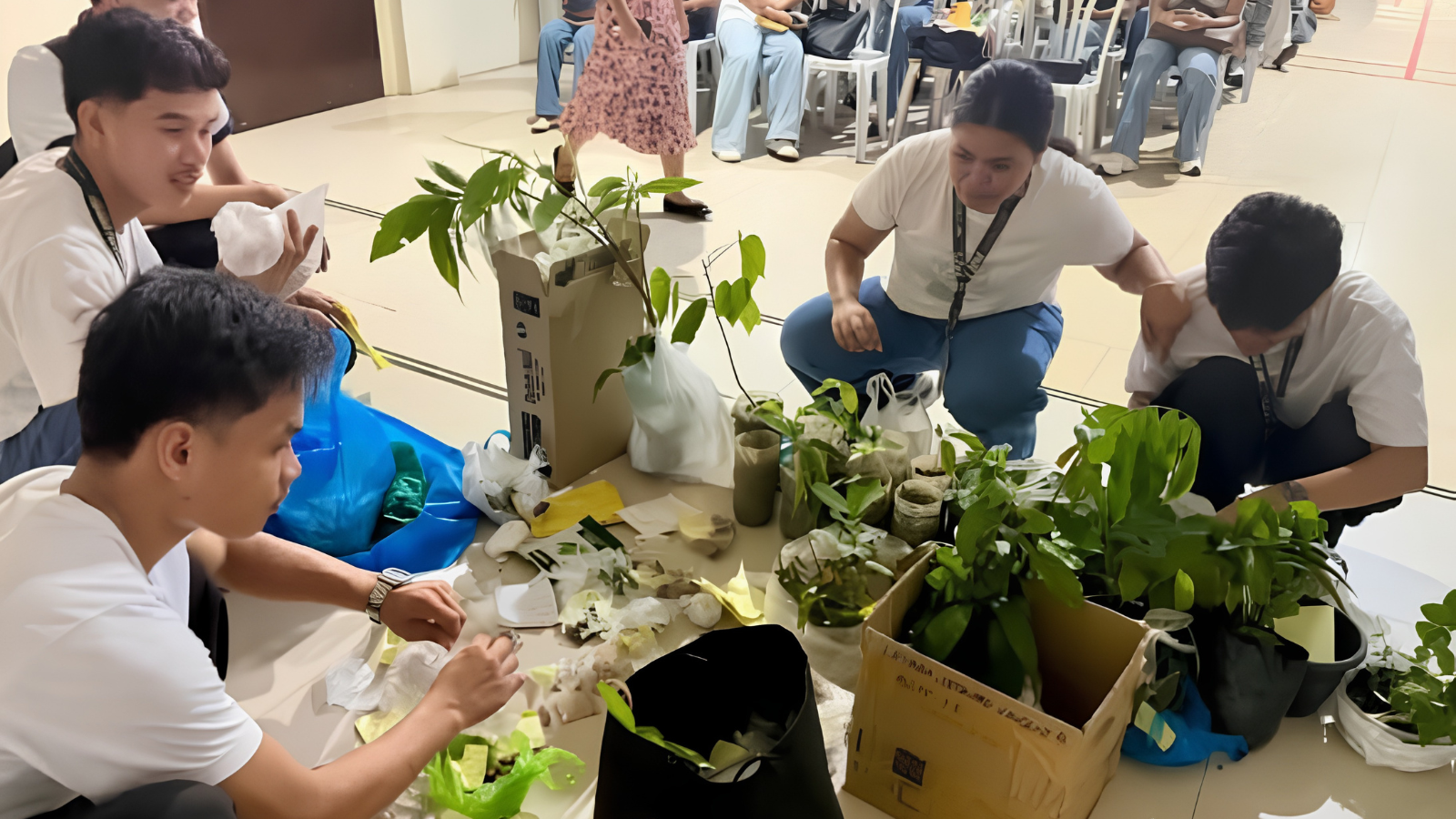
Meanwhile, through the Civic Welfare Training Service (CWTS), Samar Colleges, Inc. provides students with opportunities to apply civic responsibility and community engagement through activities that address the needs and welfare of local communities. The program emphasizes participation in initiatives related to community development, social welfare, health, safety, environmental protection, and other areas of public service.
Through these program components, students are exposed to learning experiences that emphasize responsible citizenship, community involvement, service, leadership, and national development. Depending on the activities and instructional components implemented, these experiences provide additional opportunities to understand and respond to community needs, promote social welfare, support literacy, and contribute to community preparedness and development.
The courses presented above represent selected examples of how Samar Colleges, Inc. incorporates sustainability-related concepts and learning outcomes into its academic curricula. Across different disciplines, other academic offerings likewise provide opportunities for students to engage with issues relevant to sustainable development, reflecting the institution's recognition that sustainability is a shared concern that extends beyond a single field of study. Through these curricular provisions, SCI continues to promote learning that connects disciplinary knowledge with the social, economic, environmental, and institutional challenges of contemporary society.